

A great fade can completely change the way a haircut looks. It adds clean structure around the sides while keeping the top flexible enough for different textures, lengths, and personal styles. The right fadet can make thick hair feel lighter, give fine hair more shape, and create a sharper outline around the face. A fade cut is also one of the most adaptable choices for men.
You can keep the sides subtle with a low fade, create stronger contrast with a high fade, or take the sides down to the skin for a crisp finish. The top can be short, curly, textured, slicked back, messy, or long enough to create a more dramatic look. This guide covers modern fade styles, how to choose one for your hair and face shape, what to tell your barber, styling tips, maintenance, and common mistakes. Whether you want a classic everyday haircut or a bold contemporary look, there is an option here worth considering.
What Is a Fade Cut?
A fade cut gradually reduces the hair length on the sides and back, creating a smooth transition from longer hair near the top to shorter hair toward the neckline. The transition can start low, around the ears and lower sides, or higher up toward the temples. The main difference between fade cut styles is where that transition begins and how short the shortest section becomes. A taper usually leaves more hair around the sideburns and neckline, while a fade creates a more visible reduction around the sides.
The beauty of a fade cut is that it can be customized. Your barber can adjust the height, contrast, blend, and top length to suit your hair texture and desired appearance.
Best Fade Cut Styles for Men
Classic Low Fade
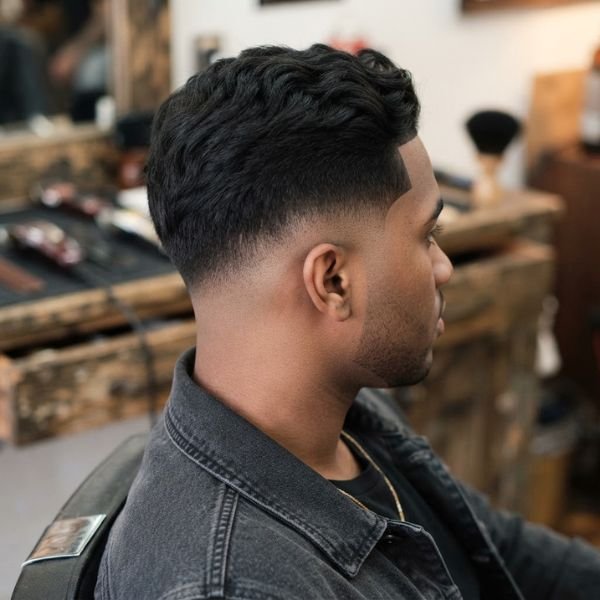
A classic low fade cut starts close to the ears and gradually blends upward into the longer hair. It gives you a clean appearance without creating too much contrast.
This is an excellent choice if you want something suitable for work, college, formal events, and everyday wear.
Best for: Straight, wavy, thick, or medium-density hair.
Mid Fade With Textured Top

A mid fade cut begins around the middle of the sides, giving the haircut a stronger visual contrast. Pairing it with a textured top creates a modern, effortless finish.
Ask your barber to leave enough length on top to create separation with a matte styling product.
Best for: Thick and medium-density hair.
High Fade With Short Crop

A high fade cut removes more weight from the sides and brings attention to the top. A short textured crop makes the overall look practical and easy to maintain.
This combination works particularly well when you want a sharp haircut without spending much time styling.
Best for: Straight, wavy, and thick hair.
Skin Fade With Pompadour

A skin fade cut creates a very close finish at the lowest point, while a pompadour keeps significant volume on top. The contrast makes this style stand out.
Because the top is longer, you will need a blow dryer and a suitable styling product to maintain the shape.
Best for: Straight and slightly wavy hair.
Low Fade With Curly Top

Curly hair looks especially good when the sides are cleaned up while the natural curls remain longer on top. A low fade cut keeps the result balanced and avoids removing too much visual weight.
Use a curl cream or lightweight leave-in product to define the curls without making them stiff.
Best for: Curly and coily hair.
Fade With Slick Back

A slick back combines short, blended sides with longer hair that is brushed backward. It can look polished with a shine product or modern with a matte clay.
The key is keeping the transition smooth so the sides support the longer top instead of competing with it.
Best for: Straight and wavy hair.
Fade With Messy Fringe

A messy fringe gives the haircut a relaxed, youthful appearance. The fade cut keeps the sides controlled while the fringe adds movement and texture.
Avoid making the fringe too uniform. Slight variation in length helps the style look more natural.
Best for: Straight, wavy, and slightly curly hair.
Fade With Side Part

A side part brings a classic element to a modern haircut. The fade cut creates a clean foundation, while the part gives the top a defined direction.
For a professional appearance, keep the part subtle. For a stronger style, ask your barber for a hard part.
Best for: Straight and wavy hair.
Fade With Beard Blend

Connecting the haircut with a beard can create a seamless appearance around the temples and sideburns. The beard does not need to be long for this technique to work.
Ask your barber to blend the sideburn area gradually into the facial hair rather than creating an abrupt line.
Best for: Men with light stubble to full beards.
Fade With Line Up
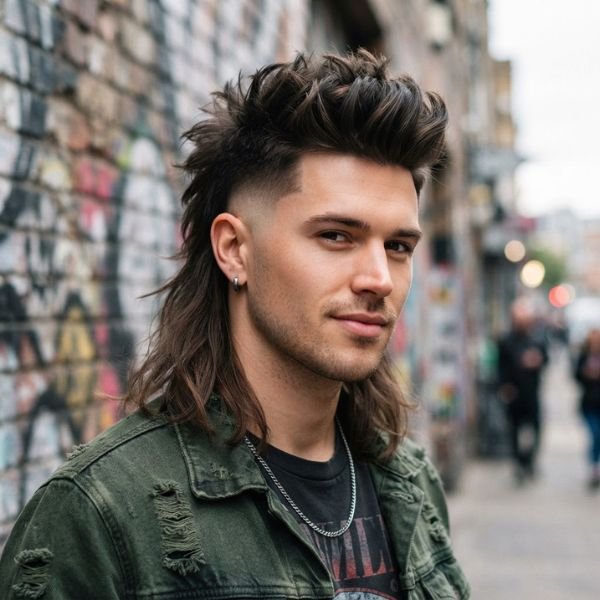
A line up adds sharper definition around the forehead and temples. It works especially well when your natural hairline is relatively even.
The best result is usually a clean enhancement of your existing shape rather than an overly aggressive new hairline.
Best for: Straight, curly, coily, and textured hair.
Fade With Quiff

A quiff gives the top height and movement while the faded sides keep the haircut visually balanced. It is a versatile option that can be styled neatly or casually.
Use a blow dryer to lift the front before applying a small amount of matte paste or clay.
Best for: Straight and wavy hair.
Fade With French Crop
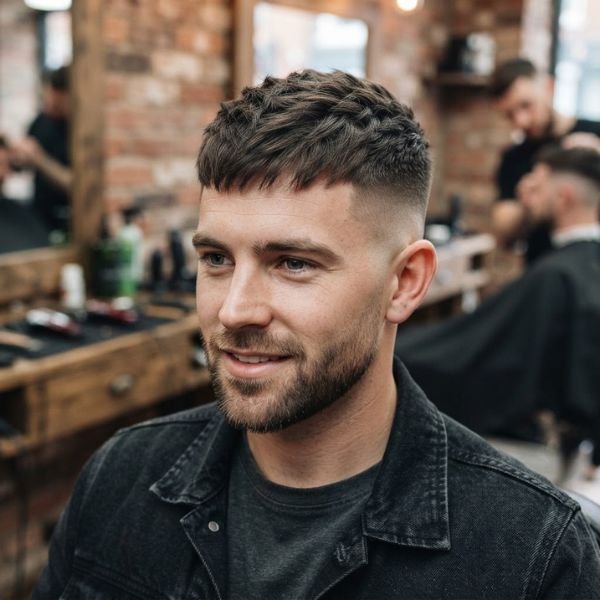
A French crop keeps the top relatively short and uses a forward fringe for a simple, textured finish. The faded sides make the haircut look cleaner without requiring complicated styling.
This is a strong low-maintenance option for men who prefer short hair.
Best for: Straight, wavy, and thick hair.
Fade With Faux Hawk

A faux hawk creates more height along the center of the top without the extreme commitment of a traditional mohawk. The faded sides emphasize the central shape.
Texturizing the top rather than making it perfectly rigid gives the style a more modern appearance.
Best for: Thick, straight, wavy, and curly hair.
Fade With Long Textured Top

Keeping the top longer gives you more styling possibilities. You can wear it forward, backward, to the side, or in a loose messy finish.
The sides should be blended carefully so the longer top does not look disconnected unless that contrast is intentional.
Best for: Thick and medium-density hair.
Fade With Hard Part

A hard part creates a clearly defined shaved line that separates the top from the shorter side. It adds visual structure and works particularly well with side-parted styles.
Because the line becomes less distinct as the hair grows, regular barber visits are important.
Best for: Straight and wavy hair.
Fade With Mohawk

A mohawk-inspired fade leaves more length through the center while reducing the sides significantly. The result is bold and expressive.
You can make the top spiky, curly, textured, or natural depending on your hair type.
Best for: Thick, curly, and coily hair.
Fade With Textured Spikes

Short textured spikes provide a youthful, energetic appearance. The fade removes bulk from the sides and makes the top texture more noticeable.
A matte clay or fiber is usually better than a heavy gel because it keeps the hair flexible.
Best for: Straight and thick hair.
Fade With Buzzed Top

A very short top creates a simple, masculine haircut that requires minimal daily styling. The fade adds shape and prevents the haircut from looking too uniform.
The top and sides should be balanced according to your head shape and hairline.
Best for: Men who prefer practical short hairstyles.
Fade With Natural Waves

Instead of forcing the top into a rigid style, let natural waves provide the texture. The fade cut sides make the waves more noticeable and create a clean outline.
A lightweight styling cream can reduce frizz while preserving natural movement.
Best for: Wavy and slightly curly hair.
How to Choose the Right Fade
Choosing the right fade is mostly about balancing your hair, face shape, lifestyle, and desired contrast.
Consider Your Hair Type
Straight hair gives you many styling options, including slick backs, quiffs, crops, and side parts. Wavy hair benefits from textured tops that work with natural movement. Curly and coily hair can look excellent with controlled sides and a longer textured top.
Thick hair often benefits from stronger fading because removing side weight makes the haircut easier to manage. Fine hair may look better with a softer fade that does not expose too much scalp.
Consider Your Face Shape
A longer face can benefit from a lower fade and moderate top height, which helps avoid making the face appear even longer.
Rounder faces often work well with more height on top and tighter sides because the vertical shape can create a more balanced appearance.
Square faces are naturally structured, so most fade heights can work. Oval faces are similarly versatile and can support many combinations.
Think About Your Lifestyle
If you want a haircut that looks good with minimal effort, choose a short top with a low-maintenance fade. If you enjoy styling your hair every morning, you can keep more length and experiment with quiffs, pompadours, slick backs, or textured finishes.
Your workplace also matters. A subtle fade is usually easier to keep professional, while a high-contrast style may suit more relaxed environments.
Fade Cut vs Taper
The terms are sometimes used interchangeably, but they describe slightly different approaches.
A taper gradually shortens the hair around specific areas such as the sideburns and neckline while leaving more fullness around the sides. A fade generally creates a stronger transition and can take the hair much closer to the skin.
If you want a conservative haircut with plenty of natural fullness, a taper may be better. If you want the sides and back to look visibly cleaner and more defined, a fade is usually the stronger choice.
Fade Cut vs Undercut
An undercut usually creates a more noticeable separation between the long top and short sides. Instead of blending the lengths smoothly, the sides can remain almost uniformly short.
A fade cut relies on a gradual transition. That blend is what gives the haircut its clean, polished appearance.
Choose an undercut if you want strong separation and a more dramatic silhouette. Choose a fade if you prefer a smoother transition.
What to Tell Your Barber
A vague request such as “give me a fade” can produce a different result from what you imagined. Be specific about the height and finish.
Tell your barber:
- Whether you want a low, mid, or high fade
- Whether the shortest area should be skin, very short, or slightly longer
- How much length you want on top
- Whether you want a natural or sharp hairline
- Whether you want a beard blend
- How much styling you normally do
- Whether you want to preserve curls, waves, or natural texture
A reference photo is also useful, but explain what you like about the photo. Your hair density, growth pattern, and head shape may require adjustments.
How to Style a Fade
The styling method depends mainly on the top.
For a textured look, apply a small amount of matte clay or paste to dry or slightly damp hair. Work the product through the top with your fingers and shape it naturally.
For a slick style, use a comb and a stronger product. A blow dryer can help direct the hair and create volume before the finishing product is applied.
For curls and waves, avoid brushing aggressively when the hair is dry. Use a curl-friendly cream or leave-in conditioner and allow the texture to form naturally.
For short crops and buzzed tops, styling may not be necessary at all. A small amount of lightweight product can add texture if desired.
Frequently Asked Questions:
What is the most versatile fade?
A low or mid fade is generally among the most versatile choices because it works with short, medium, and longer tops. The best option still depends on your hair type and preferred level of contrast.
Does a fade work with curly hair?
Yes. Curly hair can look especially defined when the sides are cleaned up while the top retains its natural texture. The fade height should be selected according to curl density and the amount of volume you want.
How long does a fade stay fresh?
The sharpest appearance often lasts for roughly one to two weeks, although this varies with hair growth speed and how short the fade is. Many men refresh the haircut every few weeks.
Is a fade high maintenance?
The daily styling can be very low maintenance, especially with a short top. The main maintenance comes from regular barber visits if you want the sides to stay crisp.
What is better, a fade or taper?
Neither is universally better. A taper is more subtle and keeps additional fullness, while a fade creates a stronger blended effect. Choose based on how much contrast and scalp exposure you want.
Can I get a fade with a beard?
Absolutely. A beard blend can connect the haircut and facial hair smoothly. Your barber can adjust the sideburn area so the transition looks natural.
What fade should I get for a round face?
A moderate or higher fade with some height on top can create a more elongated visual shape. Avoid excessive width around the sides if your goal is to make the face appear slimmer.
Can a fade make thin hair look thicker?
It can create the appearance of greater contrast by removing bulk around the sides, but it cannot increase hair density. A textured top and suitable styling product may help fine hair look fuller.
Conclusion
A good fade is more than simply shortening the sides. It is about creating a balanced transition that works with your top length, hair texture, face shape, and lifestyle. That is why two men can request similar styles and still get very different results.
If you want a safe starting point, a low or mid fade is easy to adapt. If you prefer stronger contrast, a high fade or skin-level finish can create a sharper look. Curly, wavy, straight, and coily hair can all work with faded sides when the cut is customized correctly.
The best approach is to show your barber a clear reference, explain how much maintenance you are comfortable with, and be specific about the height and shortest point. With the right proportions, a fade cut can become a reliable foundation for everything from a simple crop to a bold textured style.

Oliver Matthew Wilson is a fashion writer and content creator passionate about modern style, fashion trends, outfit ideas, and everyday inspiration. He enjoys sharing practical fashion insights and fresh styling ideas to help readers discover their personal style with confidence.