

The mullet fade haircut has become one of the most recognizable modern men’s hairstyles because it combines two very different ideas: shorter, cleaner sides and extra length toward the back. The result is a haircut with personality, movement, and plenty of room for customization. Unlike the traditional mullet, modern versions can be subtle, textured, curly, sharp, or highly dramatic. The fade around the sides adds a cleaner finish and makes the longer back stand out without making the entire haircut look outdated.
Whether you prefer a low-key style for everyday wear or a bold haircut that attracts attention, the right haircut can be adapted to your hair texture, face shape, and personal style. This guide covers the best styles, how to choose the right variation, what to tell your barber, styling techniques, maintenance advice, and common questions.
What Is a Mullet Fade Haircut?
A mullet fade haircut combines the basic shape of a mullet with faded sides and back. The hair is generally shorter around the temples and sides while more length is preserved toward the rear.
The fade creates a gradual transition instead of leaving the sides at one uniform length. This gives the haircut a cleaner and more contemporary appearance.
The amount of length in the back can vary considerably. Some men prefer a short, subtle tail, while others choose several inches of length for a much more noticeable silhouette.
The top can also be customized. It may be short and textured, medium-length and messy, curly, spiky, slicked back, or even paired with a fringe.
Best Mullet Fade Haircut Styles
Classic Modern Mullet Fade

A classic modern mullet fade haircut keeps the traditional front-and-back structure but replaces the heavier sides with a clean fade.
The top remains relatively natural, while the back has enough length to create recognizable mullet movement. This is a good starting point if you want the style without going extremely bold.
Best for: Straight, wavy, and thick hair.
Low Fade Mullet
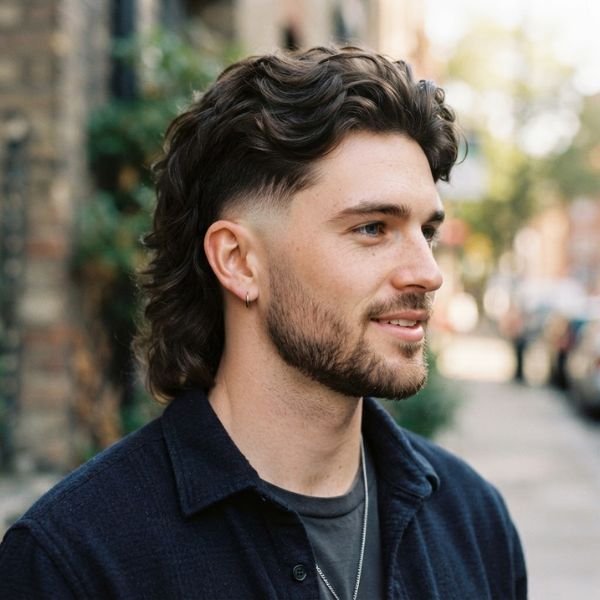
A low fade keeps the transition close to the ears and lower sides. This leaves more fullness around the upper sides while still creating a clean outline.
The longer back can be kept relatively subtle, making this one of the easier versions to wear in different settings.
Best for: Men who want a softer and more versatile look.
Mid Fade Mullet

A mid fade creates more contrast than a low fade while maintaining a balanced appearance. The transition begins around the middle of the sides, helping emphasize the longer top and back.
This version works especially well with textured styling.
Best for: Medium and thick hair.
High Fade Mullet
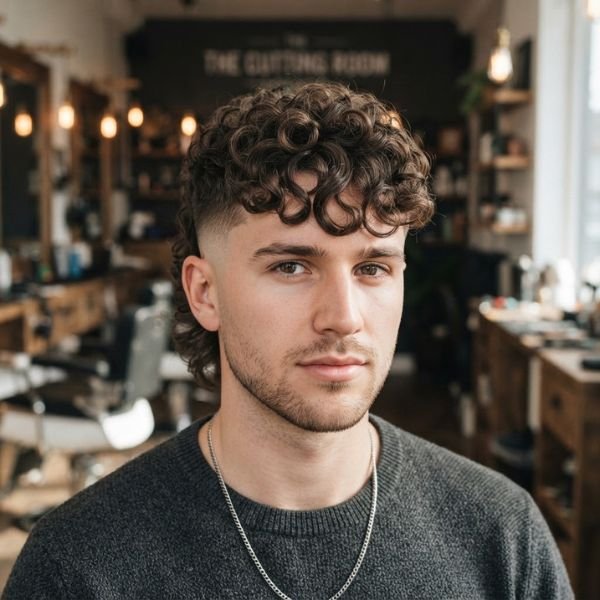
A high fade creates a dramatic difference between the longer sections and the closely cropped sides. It gives the haircut a stronger, more aggressive appearance.
Because the fade removes significant side volume, the shape of the top and back becomes particularly important.
Best for: Men who prefer high contrast.
Skin Fade Mullet
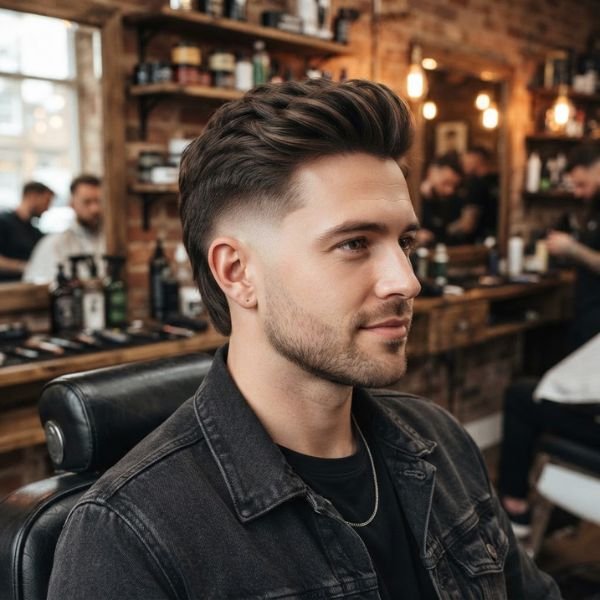
A skin fade takes the shortest portion of the sides down very close to the scalp. Combined with a longer back, it creates a sharp contrast.
This style requires more frequent maintenance because the skin-level finish becomes less defined as the hair grows.
Best for: Bold, high-contrast hairstyles.
Curly Mullet Fade

Curly hair gives a mullet natural volume and movement. The sides can be faded while the curls remain longer through the top and back.
A curl-enhancing cream can help define the shape without making the hair look stiff.
Best for: Curly and coily hair.
Wavy Mullet Fade

Natural waves create a relaxed version of the style. Instead of forcing the back into a rigid shape, the hair is allowed to move naturally.
The fade keeps the sides tidy while the longer back provides texture and flow.
Best for: Wavy and slightly curly hair.
Textured Mullet Fade

A textured version uses layers and separation throughout the top and back. The result is less polished and more deliberately messy.
Ask your barber for point cutting or texturizing that creates movement without making the hair excessively thin.
Best for: Thick and medium-density hair.
Mullet Fade With Fringe

Adding a fringe changes the balance of the haircut by bringing more attention to the forehead. The fringe can be blunt, choppy, textured, or slightly swept to one side.
A shorter fringe creates a sharper appearance, while a longer fringe feels more relaxed.
Best for: Straight, wavy, and textured hair.
Mullet Fade With Beard

Facial hair can complement the strong shape of the haircut. A beard or heavy stubble adds additional definition around the lower face.
Ask your barber to blend the sideburn area into the beard so the transition does not look disconnected.
Best for: Men with stubble or beards.
Mullet Fade With Line Up

A line up creates additional definition around the temples and forehead. This can make the haircut look sharper, particularly when combined with a close fade.
The hairline should still look natural. Overly aggressive shaping can make the haircut appear less balanced.
Best for: Straight, curly, and coily hair.
Mullet Fade With Design

Hair designs can be shaved into the faded section to make the haircut more distinctive. Simple lines are usually easier to maintain than highly detailed patterns.
A design should complement the natural flow of the haircut rather than distract from the mullet shape.
Best for: Creative and statement-making styles.
Short Mullet Fade

Not every mullet needs a long back. A short version keeps just enough length behind the head to create the characteristic shape without becoming dramatic.
This is a practical introduction to the trend if you are unsure about committing to a longer tail.
Best for: Beginners and professional environments.
Long Mullet Fade

A long version preserves substantial length through the back. This creates a much stronger silhouette and provides more opportunities for styling.
The longer back can be worn straight, wavy, curly, messy, or pushed behind the ears.
Best for: Men comfortable with longer hair.
Mullet Fade With Spiky Top
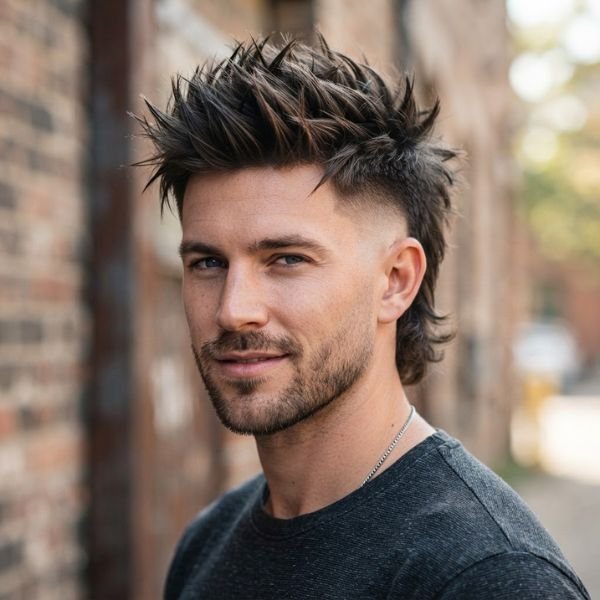
A spiky top adds height and energy to the front of the haircut. The faded sides create contrast while the longer back keeps the recognizable mullet shape.
Use a matte clay or fiber to create flexible spikes rather than hard, shiny points.
Best for: Straight and thick hair.
Mullet Fade With Mohawk Influence

A mohawk-inspired version keeps more height and density through the center of the head while the sides are faded heavily.
The back remains longer, creating a strong combination of mohawk and mullet characteristics.
Best for: Thick, curly, and adventurous hairstyles.
Natural Mullet Fade

A natural variation focuses on preserving the existing texture instead of creating a highly structured haircut. The barber cleans the sides and controls the overall shape while leaving the top and back relatively free.
This can be an excellent choice for men who want the trend without looking overly styled.
Best for: Wavy, curly, and naturally textured hair.
How to Choose the Right Mullet Fade
The best mullet fade haircut depends on how much contrast and length you are comfortable wearing. If you want something subtle, start with a low fade and a shorter back. This gives you the basic shape without making the haircut too dramatic.
If you enjoy high-contrast hairstyles, a mid or high fade can make the longer sections stand out more strongly. Your hair texture also matters. Thick hair can support substantial length in the back, while fine hair may look better with controlled layers and moderate length.
Mullet Fade for Different Hair Types
Straight Hair
Straight hair provides a clean canvas for sharp lines, textured layers, fringe styles, and longer backs. Styling products can be used to add volume and separation.
Avoid allowing the back to become completely flat if you want a more modern appearance. Light texturizing can create movement.
Wavy Hair
Wavy hair naturally adds dimension to the longer portions. A low or mid fade can keep the sides controlled while the waves create texture through the top and back.
A lightweight cream is often enough to enhance the natural pattern.
Curly Hair
Curly hair can create a distinctive and full silhouette. The fade removes excess weight around the sides while preserving the curls where you want volume.
Do not ask for excessive thinning through the curly sections because it can disrupt the curl pattern.
Coily Hair
Coily textures can produce a bold and highly defined version of the style. The barber can use the fade to establish a clean foundation while keeping enough length through the top and back.
A precise line up can add another layer of definition.
Fine Hair
Fine hair generally benefits from moderate length rather than excessive length. Too much weight in the back can make the hairstyle appear flat.
Texture and strategic layering can help create a fuller appearance.
Best Fade Height for a Mullet
The fade height changes the entire character of the haircut. A low fade keeps more fullness and gives the style a softer appearance. A mid fade provides a balanced amount of contrast and is often the easiest option for a first attempt.
A high fade creates the strongest contrast and makes the longer top and back more prominent. A skin fade takes that contrast even further. If you are uncertain, a mid fade is a useful starting point because it can be adjusted during future appointments.
Mullet Fade and Face Shape
Face shape should influence the proportions of the haircut. Men with rounder faces may benefit from additional height on top and tighter sides. This can create a more elongated visual profile.
Longer faces may look better with moderate top height and a balanced back. Excessive vertical volume can make the face appear longer. Square faces can usually handle stronger contrasts because the natural jaw structure already provides definition. Oval faces are highly adaptable and can work with almost any variation.
What to Tell Your Barber
Before getting a mullet fade haircut, explain exactly how much length you want to preserve.
Tell your barber:
- The fade height you prefer
- How short you want the sides
- How much length you want in the back
- Whether you want a natural or sharp hairline
- How much texture you want on top
- Whether you want a fringe
- Whether you want a beard blend
- How much daily styling you are willing to do
A reference photo can make the conversation much easier. However, your barber may need to adjust the proportions based on your hair density, growth pattern, and head shape.
How to Style a Mullet Fade
Styling depends on your hair texture and the finish you want. For a messy appearance, work a small amount of matte clay through dry hair. Use your fingers to separate the top and back rather than creating a perfectly uniform shape. For straight hair, a blow dryer can add volume before applying styling products.
For waves and curls, use a curl cream or lightweight leave-in product. Avoid excessive brushing because it can create frizz and disrupt the natural pattern. For a sleek version, apply a moderate-hold product and use a comb to direct the top backward or toward the side. The back should generally retain movement. Making every strand rigid can remove some of the relaxed character that makes the style appealing.
How to Maintain a Mullet Fade
The sides usually need more frequent attention than the longer back. As the fade grows out, the clean transition becomes less visible. Most men can refresh the sides every few weeks depending on how quickly their hair grows and how precise they want the haircut to remain.
The longer sections should be trimmed when the ends become dry, uneven, or difficult to style. You do not necessarily need to remove much length. Use shampoo according to your hair type and condition the longer sections regularly. Longer hair often needs more moisture than the faded sides.
Common Mullet Fade Mistakes
Making the Back Too Long Too Quickly
A dramatic back can be tempting, but excessive length can make the haircut difficult to balance. Gradually increasing the length gives you more control.
Choosing the Wrong Fade Height
A fade that is too high can remove more side volume than you expected. If you want a softer style, start lower.
Ignoring Hair Texture
The same haircut does not behave identically on straight, curly, and coily hair. Your barber should adapt the shape to your natural texture.
Overusing Styling Product
Heavy products can make the top and back look greasy or stiff. Start with a small amount and add more only if necessary.
Neglecting the Back
Because the back is one of the defining features of the style, it should be checked from multiple angles before leaving the barbershop.
Frequently Asked Questions:
Is a mullet fade haircut still popular?
Yes. The style continues to appear in modern men’s grooming because it can be customized into subtle, textured, curly, or high-contrast versions.
Is a mullet fade haircut suitable for straight hair?
Absolutely. Straight hair can make the fade and longer back look particularly defined. Texture can be added with layering and styling products.
How long should the back of a mullet be?
There is no single ideal length. A short back works well for a subtle version, while a longer back creates a more dramatic appearance. Your preferred style and workplace should guide the decision.
Is a mullet fade difficult to maintain?
The longer sections may require regular trimming, while the fade needs periodic refreshing to remain sharp. Daily styling can range from almost none to several minutes depending on the desired finish.
What fade works best with a mullet?
A low or mid fade is usually the easiest starting point because it provides contrast without removing too much side volume. A high or skin fade is better if you want a bolder result.
Can you get a mullet with curly hair?
Yes. Curly hair can create excellent volume and movement through the top and back. The key is preserving enough length for the curl pattern to develop naturally.
Does a mullet work with a beard?
Yes. A beard can strengthen the overall shape, especially when the sideburns are blended smoothly into the facial hair.
How do I ask my barber for a mullet?
Show a reference photo and explain the fade height, top length, and desired back length. Also tell the barber how much daily styling you are comfortable doing.
Conclusion
A modern mullet fade haircut offers a useful balance between individuality and clean grooming. The faded sides keep the haircut controlled, while the longer back provides movement and character. The best version is not necessarily the most dramatic one. A short back and low fade can create a subtle introduction, while a high fade and longer tail can deliver a much stronger statement. Hair texture, face shape, lifestyle, and maintenance preferences should all influence the final design.
If you are trying the style for the first time, start with a moderate fade and enough length in the back to create the shape without going too extreme. You can always make the next version longer, shorter, sharper, or more textured after seeing how the haircut works for you. With clear communication and a skilled barber, a mullet fade haircut can be customized into a distinctive hairstyle that feels current, practical, and personal.

Oliver Matthew Wilson is a fashion writer and content creator passionate about modern style, fashion trends, outfit ideas, and everyday inspiration. He enjoys sharing practical fashion insights and fresh styling ideas to help readers discover their personal style with confidence.